giovedì 21 luglio 2016

Discorso di Laurea

Come mio solito quando arriva un giorno importante, anche in occasione della mia cerimonia di laurea ne ho approfittato per esprimere il mio amore e per trasmettere i miei valori ad amici e parenti, chi dovesse essersi perso il mio discorso può leggerlo qua sotto. Grazie a tutti voi per il supporto costante e incondizionato degli ultimi tre anni.


"C’è un momento nella vita in cui è lecito fermarsi a pensare, un momento in cui è giusto porsi delle domande e uno in cui abbiamo bisogno di trovare delle risposte, un po’ come fanno i filosofi. Sono felice di comunicarvi che oggi, qui, con voi, è uno di quei momenti.

Inizierò con due considerazioni:

Io non volevo studiare, non faceva parte dei miei piani né della mia persona. Lo pensavo tre anni fa e lo penso ancora oggi, ma oggi, posso essere più preciso e affermare che io non volevo studiare, ma volevo e voglio imparare, e, se dovessi rinunciare ad imparare, la mia vita finirebbe li. 

Io non avevo bisogno di un certificato di laurea. Non sopporto chi giudica le capacità di un altro basando la propria opinione su un foglio di carta, e, se devo essere sincero, muoio al pensiero che qualcuno mi giudichi per un foglio che, tutto sommato, non dice niente di me. Pensa e ripensa, e capisci anche che io, non avevo bisogno di una laurea, ma semplicemente di sentirmi sicuro.

E’ vero, certe volte non basta farsi delle domande per trovare delle risposte, o almeno non quelle giuste. La maggior parte delle volte infatti, per quelle dobbiamo aspettare che lo spettacolo inizi. E io, che nello spettacolo recitavo la parte del protagonista, non solo non potevo permettermi di andare un attimo al bagno ma non potevo nemmeno uscire di scena prima degli applausi, o perché no prima del lancio dei pomodori.

Più volte, soprattutto nell'ultimo anno, stremato dal lavoro e dai miei ideali, ho raccontato ad alcuni di voi i miei dubbi e le mie perplessità che si concretizzavano nella mia voglia di mollare gli studi per evitare di sentirmi un incoerente durante il resto della mia vita. Incoerente perché, gli studi, mi hanno insegnato a diventare un uomo di successo, ma, allo stesso tempo, hanno fallito nell'insegnarmi cosa il successo sia.

E’ qui che vi chiedo di chiudere gli occhi per poter chiedere a voi stessi “cos'è il successo?” pensateci, pensateci e tenete la risposta in mente.

La mia laurea racconta che il successo è fatto di numeri, di crescita, di avanzamenti di carriera, di offerta e di domanda, di marketing e promozione, di debiti e di capitale. Ancora, mi hanno insegnato a prendere delle decisioni, mi è stato insegnato quando vendere, quando comprare, quando assumere, e quando licenziare… sono stati bravissimi a insegnarmelo, grazie, prometto che tutte queste cose non le dimenticherò mai…

E c’è anche qualcos'altro che non dimenticherò mai, infatti, fortunatamente ci ha pensato la vita a spiegarmi perché è sbagliato imparare dal manager di un casinò; fortunatamente, siete arrivati voi ad insegnarmi ciò che nessun professore mi ha mai detto, e, fortunatamente, per imparare cosa sia il successo ho dovuto vivere, non studiare. Ho dovuto ascoltarvi e viaggiare per capire che il successo di una persona non è fatto di numeri ma di famiglia, amore, generosità, sacrifici, impegno, determinazione, altruismo e ideali.

Quindi grazie, perché è un sollievo sapere che la mia laurea non sia fatta di numeri ma di persone e di valori, grazie davvero perché il merito è vostro se oggi non mi sento un incoerente.

Infine, ci tengo a precisare che questa non è una dichiarazione di pentimento e non voglio che venga scambiata per tale in alcun modo, sono laureato e mi prendo così, come sono e senza rimorsi, fiero di me così come credo anche voi lo siate. Nel mio percorso di vita che ormai è lungo un quarto di secolo, ho imparato che le coincidenze sono poche mentre le spiegazioni sono tante, tutto è scritto, dentro e fuori di noi.

Più di qualsiasi altra cosa, la mia laurea mi ha insegnato chi sono e chi non sono, cosa voglio e cosa non voglio. La mia laurea, mi ha fatto capire un po’ meglio com'è quel mondo che vorrei. La mia laurea, non solo ha ravvivato la vostra stima e il vostro amore nei miei confronti, ma mi ha anche regalato l’amore di una compagna di viaggio che ormai è diventata parte della mia quotidianità e del mio essere. La mia laurea, è un pass-par-tout per l’edificio del futuro. La mia laurea è ciò che io faro di lei."

venerdì 4 marzo 2016

ON INEQUALITY - by Harry G. Frankfurt

ON INEQUALITY


By Harry G. Frankfurt


Is Equality a moral obbligation? Should we aim at it, or would be better to focus on pursuing poverty alleviation? This is one of the main questions fomenting Frankfurt’s research and therefore also one which is bringing most of the content into his book, or at least, in the first part of it. More generally, this script tries to investigate the morality behind equality, finally coming to the conclusion that morality not only is not directly related to equality, but at the very end of the book it also states that:

"But the widespread conviction that equality itself and as such has some basic value as an independently important moral ideal is not only mistaken. It is an impediment to the identification of what is truly of fundamental moral and social worth."

I will come back to this statement later in this article!

Now, although I admit the book led me to think of Equality as I never did before, it still seems to me like Mr. Frankfurt is kind of focusing on a nutshell. His concept of equality is in fact purely based on possession and property, while I think it is obvious that such a discussion should be focusing on rights instead.

For instance, as endorsed by the author it is true that our society (or maybe our economy) is now more than ever based on "needs creation" and that we often need something just because someone else need that "something", and it is also true that we human become more sensible-emotional when we see someone who can't benefit from minimal living condition rather than when we see someone who can't afford to buy the same latest mobile phone we got.

What cannot be ignored is that in our planet resources are limited, and therefore, can we still assert that we have no moral obbligation to pursue equality? Isn't poverty in a first place a matter of resources' allocation?

In few words I could either think that if everybody had enough I would not care about me having more, or I can be realist and acknowledge that me having more comports someone else around the planet not having enough. Once again, I could discuss with Mr. Frankfurt about what does the word "enough" mean, or we could start working hard and making great sacrifices because we acknowledge all together that in our world there are 80M kids who have absolutely no right to education, 850M people who are undernourished and 670M who have no access to safe water.

Of course we can ponderate about the beauty and complexity of what for each of us the words "enough" or "sufficient" mean, but at the end of the day the world would be exactely the same; but if we want to make this world a little bit better, day by day, then yes, we need to be convinced and to convince others about the fact the each human in Earth should have equal opportunities. This is the basic value that the INDIPENDENTLY MORAL IDEAL OF EQUALITY bring with itself.

Although we should be grateful to Mr. Frankfurt for his scientifical efforts and achievments, I think that this book might slow down our urge as human beings to look for a fair distributions of wellness across disadvantaged geopolitical zones and social classes, it weakens our altruism and threatens our common sense of solidarity.


You might want to read this book if:
  • you would like to save the world;
  • among your previous readings there are authors like Sen, Nussbaum and Stiglitz;
  • you have never questioned the meaning of equality

No best quotations in this reading.
_______________________________________________________________________________

Thank you for reading my reviews, I would appreciate if you could comment and share my post, keep checking my blog for more reviews or visit my Visualizza il profilo di Enrico Porceddu su LinkedIn .


If you are wondering, I do not receive any kind of benefit from any person, institution or company for writing my reviews.

domenica 26 luglio 2015

THE MESH, by Lisa Gansky

THE MESH


By Lisa Gansky


As its tagline forecasts, this book is very business-oriented. You may consider taking one of the previous readings I reviewed if you find yourself more on the side of the consumer, since here you will more likely find out how to mesh up your business and not your life.

So first of all, WHAT is the MESH? I'm pretty sure that there is no better person than the author Lisa Gansky to explain this concept since she is the mind behind its conception. So if you want to make sure you catch up with the real meaning, get the book and give yourself your own interpretation of it.


More concretely, as the author writes "Mesh businesses share four characteristics: sharing, advanced use of Web and mobile information networks, a focus on physical goods and materials, and engagement with customers through social networks". Whereas a "Mesh Design - referred to products - is: Durable, Flexible, Reparable and Sustainable".

After these quotations, it seems clear that the Mesh concept finds its best use in association with the words "business model". However, one of the core characteristics, the one referring to the focus on physical goods, has already got old fashion since the book was pubblished in 2010. Right now, in 2015, I don't think it would be appropriate to state that the materiality of a resource could be associated to its "meshing" nature, the Mesh has got literally everywhere, ranging from skills and competencies to patents, making physical products just a part of it.

What is still to be said, is that the Mesh, just as the sharing economy (someone says they are synonim and I partially agree), shifts the focus from ownership to access, hence representing one of the biggest economic trends of our century.

On my opinion, the reading is quite pleasant but it somehow lacks a little bit of boldness, moreover some more data should have been provided, statistics are sexy and could represent a good of the reading experience. At some point, I think the author confuses the Mesh with one of its attributes: Sustainability. For instance I could think of saying Walmart is getting more sustainable, but I would definitly avoid referring to Walmart when talking about the Mesh, because for me the Mesh is more than that.

Once again, I do recommend this book! Although I'm not fully satisfied with the reading, I do recognize that it is a major work on the topic, and also one of the first of a long series. Don't miss the Mesh Directory at the end of the book, a section plenty of great meshed up businesses - some of them already out of business - to discover!

Make sure you read this book before:
  • starting your own Mesh business;
  • writing a paper on the sharing economy;
  • criticizing mesh businesses for unfair competition.

Best quotations on my opinion:

"Trust is social, which makes all business social; Mesh businesses are hypersocial".

"But like our minds, the Mesh is much greater than the sum of its parts."

_______________________________________________________________________________

Thank you for reading my reviews, I would appreciate if you could comment and share my post, keep checking my blog for more reviews or visit my Visualizza il profilo di Enrico Porceddu su LinkedIn .


If you are wondering, I do not receive any kind of benefit from any person, institution or company for writing my reviews.


Following this book:


WE-THINK
by Charles Leadbeater

WIKINOMICS
by Don Tapscott and Anthony D. Williams

giovedì 9 luglio 2015

WHAT'S MINE IS YOURS By Rachel Botsman and Roo Rogers

WHAT'S MINE IS YOURS


By Rachel Botsman and Roo Rogers


This book of about 220 pages is considered to be one of the initiators of the sharing econommy litterature. Written and pubblished for the first time in 2009, many situations described in its pages have now substantially evolved, involving new players and disrupting/innovating "old markets".


What I found curious about this book, is that many of its forecasts already turned to be correct. In fact, in 2015, the sharing economy is gaining overall trust as a collective brand, and people are trusting strangers now more than ever.

Even though the book does not really follow an accademic approach, some statistics are presented when most needed, giving more sense to the deep and why not also "philosophic" discussion of the authors who try to convince the world that collaborative consumption is our future.

The book focus on the raising importance of access-based economy, and it does so by arguing that actually, most of the times, we don't need something but we just need what that something does. As for this, also big multinationals such as XEROX, IBM and Steelcase started to follow this pattern, offering to their customers not a product per-se but its functionality. It appears clear that this approach constitutes a valid and relevant incentive for the producers to avoid built-in obsolesence, delaying as much as possible the disposal of the product and therefore prolonging its usage life.

Personally, I loved the chapter Four Principles of Collaborative Consumption. This framework includes four main points: Critical Mass, Idling Capacity, Belief in the Commons, Trust between Strangers. If you want to understand the functioning of collaborative consumption, this basic vocabulary should be known to you at least as good as your pockets. These principles helped me structuring my entire knowledge on the sharing economy, making some order in my brain.


You may consider reading this book if:

  • you wnat to take part to any collaborative consumption activity;
  • you need some extra motiavation to start your sharer-life;
  • you would like to understand the philosophy behind the sharing economy;
  • you are trying to develop your collaborative consumption idea/business
  • you are afraid about the lack of regulation in sharing-economy markets

Best quotations on my opinion:

"Not only do the things we own fill up our closets and our lives, but they also fill our minds".

"Every single person who joins or uses Collaborative Consumption creates value for another person, even if this was not the intention."

"The residents of Topanga had so many ideas that they had to decide where to start. The challange the residents experienced was coordination."

_______________________________________________________________________________

Rachel Botsman is also founder of the platform www.collaborativeconsumption.com, which is something like a wired magazine for the sharing economy, just with more functions for the users. Take a look to the website for new updates on collaborative consumption.
_______________________________________________________________________________

Thank you for reading my reviews, I would appreciate if you could comment and share my post, keep checking my blog for reviews or visit my Visualizza il profilo di Enrico Porceddu su LinkedIn .


If you are wondering, I do not receive any kind of benefit from any person, institution or company for writing my reviews.


Following this book:

THE MESH
by Lisa Gansky

WE-THINK
by Charles Leadbeater

WIKINOMICS
by Don Tapscott and Anthony D. Williams

venerdì 19 giugno 2015

SHARING IS GOOD, by Beth Buczynski

SHARING IS GOOD


By Beth Buczynski


This book contains about 80 pages of introduction to collaborative consumption and sharing economy, and 80 pages of listing and descriptions of collaborative consumption online platforms, so that you can become a sharing economy activist as soon as you finish to read the book.


As I could notice, many of those platforms already went out of market since the book was written, but this might be taken as an hint of which websites are actually doing well and are worth to be tried.

The sharing economy finds its roots in the past, which should be no surprise if we consider that "sharing" is an anthropological attitude that humans bring with them since birth. Said this, it is also true that our culture and our principles change and evolve with the time, letting most of us forget about our innate need for sharing. Here it comes the strength of this book, which tries to convince the reader that Sharing not only is our past but also our future, because the only future that makes sense, is a shared one.


I would not define this reading a "book", rather I would say it is a "determined manual for the user". Its language is comprehensible to everybody, I could find no use of academic terminology at all.


You may want to read this book if:

  • you are considering to take part to any collaborative consumption activity;
  • you need to kill your fears about sharing;
  • you would like to have an introduction to the sharing economy;
  • you want to know all the things you can have access to by using sharing economy based online platforms.

Best quotations on my opinion:

"Through the lens of collaborative consumption, it becomes clear that it's access, not ownership, that's really essential to meeting our needs and want".

"We too, are programmed to share, but as a society, we've work hard to forget it"

_______________________________________________________________________________

Thank you for reading my reviews, feel free to comment and share my post, keep checking my blog for further reviews or visit my Visualizza il profilo di Enrico Porceddu su LinkedIn .


If you are wondering, I do not receive any kind of benefit from any person, institution or company for writing my reviews.


Following this book:

WHAT'S MINE IS YOURS
by Rachel Botsman and Roo Rogers

FREAKONOMICS
by Steven D. Levitt and Stephen J. Dubner

domenica 14 giugno 2015

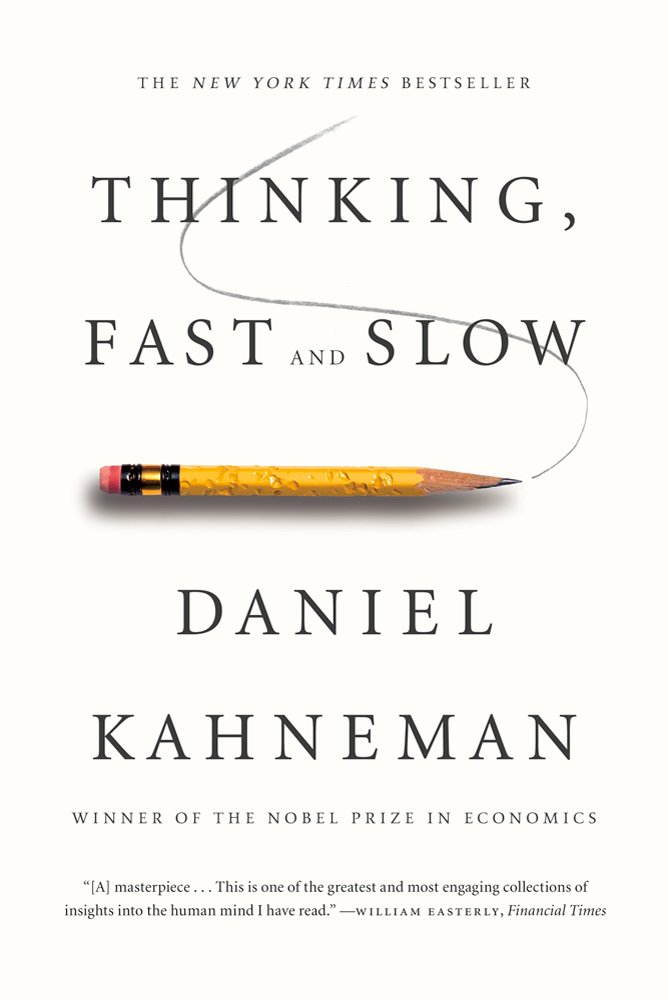
THINKING, FAST and SLOW, by Daniel Kahneman

THINKING, FAST and SLOW


By Daniel Kahneman


In this review, I am going to introduce to you a guide to the world of thinking and thinkers. A masterpiece for any lover of decisional economics, and I guess, also for philosophers.
I apologize for the almost two months without writing a single word on my blog. Lately I have pretty busy with a project which took away most of my spare time besides my professional life.

However, I can affirm that the nature of this book might be favourable to a mid-term reading approach, You'll be often provided with brand new terms and concepts which will require a good amount of research, focusing and thinking in order to be digested.

I would define this book as a "novel of statistics", with a careful and systematic order of contents and a strong propension to story-telling. All the effort of the author to facilitate readers' comprehension is to be noticed in all chapters. In fact, besides the accademic content, the book could be read by anyone with a slight passion for economics - or for psychology, although a lack of knowledge within the ad hoc terminology will certainly determine a slower reading. His "adapted" writing style detach itself from accademics writing at least as much as to allow a smooth reading rythm.

"A life-long trip into rationality" is how I would define the life of Daniel Kahneman, a Nobel-Worth Economist/Psychologist - rather than just a Nobel winner - who revolutioned our way to think of decision, declassing the utility theory and finally introducing the prospect theory.

This book will let you face many truths that are all but easy to accept. We, Humans, are exposed to a great number of factors influencing our decisions, many of them taking life into our some mind, and often generatin inconsistent decisions coming from the same individual. The subdivision of our brain - or at least of his way to function - into 2 Systems called "system 1" and "system 2" is in my opinion Kahneman's biggest intellectual property. This frame allow a great understanding of the differens phases involved in the thinking process, then related to the decision making process.

A wonderful feature of this reading is to be found at the end of every single chapter. Here, many citations of the researchers who worked with him are given to the readers as a present. I really enjoyed many citations, and many of them helped me understanding concepts and more generally the presented theories.

You should consider to get this book if:

  • you are studying economics or psychology (or you are interested in them)
  • you are a more conservative economist and you would like to challange your convinctions
  • you would love to get to a deeper meaning of "rationality"
  • you want to know to which extent our intuitions are to be trusted
  • you would like to discover if your will to undertake a particular choice is biased by something you can't see (nor think of)
  • you love behavioural statistics

I seriously believe that this book changed my way to approach decision making. It made me aware of more types of bias I was not aware before the reading. As I think the author would appreciate, I can state that this book won't keep me away from taking inconsistent decisions, but it will, however, give me a great basis to learn how to set "alarms" that will inform me about the occuring of a situation in which I am more likely to face a specific type of bias.


Best quotations on my opinion:

"The most coherent stories are not necessarily the most probable, but they are plausible, and the notions of coherence, plausibility, and probability are easily confused by the unwary".

"You will occasionally do more than your share, but it useful to know that you are likely to have that feeling even when each member of the team feels the same way."

"Remember that System 2 is lazy and that mental effort is aversive."


I would like to thank Professor Kahneman as well as the researchers who helped him achieving his goals. This book should be a part of everybody's life, for a world of knowledge and progress.
_______________________________________________________________________________

Thank you for reading my review, feel free to comment and share my post, keep checking my blog for further reviews or visit my Visualizza il profilo di Enrico Porceddu su LinkedIn .


If you are wondering, I do not receive any kind of benefit from any person, institution or company for writing my reviews.


Following this book:

SHARING IS GOOD
by Beth Buczynski

FREAKONOMICS
by Steven D. Levitt and Stephen J. Dubner

domenica 12 aprile 2015

THE ALMOST NEARLY PERFECT PEOPLE by Michael Boot

THE ALMOST NEARLY PERFECT PEOPLE
(Behind the Myth of the Scandinavian Utopia)


By Michael Boot


Considering my past which saw me spending one beautiful year in the cold Sweden - including two trips to Finland -, this book was a great occasion to reflect on how Scandinavia and its peolple changed my way to be and my expectations. I can definitely say I found myself understanding the point of view of the author all the 406 pages long, even if, a couple of times, I could not agree with his hypothesis. Nonetheless, I think this is exactly what made up my reading experience, hence trying to compare my point of view with his way to analyze facts. Moreover, he referred several times to other scandinavian anthropological readings, I think I will get them all sooner or later.

A mix of history, politics, philosophy and much more makes of this book a pleasant and interesting reading, and, as it is usual among the books I normally select, a good portion of statistics contribute to improve readers' overall comprehension. Its language is far away from the "ultra-fluent" American English we would find in Dubner and Levitt's global best sellers, but by taking advantage of an infinitely wide range of adjectives - sometimes carefully selected from slang British - the author determines his way to be bold and provocative.

Along this reading you will be questioning in their deepest meaning topics like: Social Democracy, Neutrality, Censorship, Prohibitionism, Propaganda, Atheism, Capitalism, Feminism, Parenthood, Childhood, Happyness, Privatization and much more. You won't miss a chance to get your head working, trust me you won't.

Moreover, I also appreciated his way to show - on purpose - his imperfection, represented by the difficulties which pop up when trying to understand someone else's culture. I personally experienced this, believe me, if you are Italian it is hard to have an high-school teacher who tells you "I think that you should...." instead of "You must....". I mean, I was 18, and I kind of needed teachers to look pretty sure when teaching something to me. But now, after five years, I see their point, and I can say that if somehow I am to become a teacher, I'll also opt for the "I think that you should..."

So to start, I think that you should not miss this book if:

  • you studied scandinavistics or you are interest in Scandinavia
  • you are a politician or you want to become one
  • you spent a part of your life - even a minimal one - in Scandinavia
  • you are thinking of moving to one of these countries
  • you study or you are stongly interest in anthropology
  • you want to understand whether you prefer to be dependent on your state or on your family

Finally, a question came out of my brain at the end book after I read the epilogue, maybe the one question I would like to ask him if I was given a chance to ask only ONE question... You know, we Readers are curious people, we know how damn hard would be to ask just one question after 400 pages...

Here it is:

What's the matter with the Republican-Monarchical discussion... intend as: Why do you question how it comes that they couldn't escape from the monarchy, instead of asking how can it be that they did not find an innovative alternative to Republic State or Parliamentary Monarchy? .... which are by the way old solutions which are constantly failing to make our World a better place....

Best quotations on my opinion:

"To ask your host whether you should take off your shoes is to imply a reluctance to do so; the polite host might not want to impose, but will the secretly despise you for sullying their floors".

"To achieve authentic, sustained happiness, above all else you need to be in charge of your life, to be in control of who you want to be, and be able to make the appropriate changes if you are not.


Thanks to the author for his outstanding work.
_______________________________________________________________________________

Thank you very much for reading! Hopefully my review was a determinant factor leading you to either purchase the book or simply borrow it. Keep reading, keep writing, keep thinking! Feel free to comment and share my post, I hope you enjoyed it.

Check my Visualizza il profilo di Enrico Porceddu su LinkedIn

Just in case you are wondering, I do not receive any kind of benefit from any sponsor for writing my reviews.


Following this book:

FREAKONOMICS
by Steven D. Levitt and Stephen J. Dubner

THINKING, FAST and SLOW
by Daniel Kahneman

sabato 28 marzo 2015

THINK LIKE A FREAK, by Steven D. Levitt and Stephen J. Dubner

THINK LIKE A FREAK
(How to think smarter about almost everything)


By Steven D. Levitt and Stephen J. Dubner


Also this time, the authors of Freakonomics and Super Freakonomics won't miss the chance to let you think quite more intensively than you usually do. Just as the last two books, also "Think like a Freak" is in good part talking about incentives of all kinds. Considering this, this book can be read also independently but you should read the other two either after or before since they are very connected.

This time, their will to make the reader think is more explicit. Their approach sounds pretty much like "ok now take a couple of minutes/hours and think about this" then you may keep reading,  Their bold way to comunicate is the core of this reading, as an added value to the carefully selected cases reported within the 268 pages of the book.

I think that most of the situations described in this reading - most of them accompanied by clear statistics - are to be interpreted at least twice. In fact, they will provide an overview and eventually a solution of a specific problem (be this the security and safety of a concert's stage, or the need to let the entire world believe in what you say etc.),  before applying that problem and that solution to a more general context. They kind of give away life-shortcuts for complex situations that require a lot of thinking efforts. Personally, I loved the paragraph

If you are a curious person, asking yourself too many questions, this book my represent the key to answer some of those questions. Its language is direct and it totally lacks technical words, or at least, whenever one of these words is presented, it is also explained.


Best quotation on my opinion:

None of us want to look stupid, or at least overmatched, by admiting we don't know an answer. The incentives to fake it are simply too strong.

*Talking about: why is it so hard to say I don't know
_______________________________________________________________________________


I hope you found my post useful and that therefore you'll decide to buy/read this "commercial marvel" which makes you think. Please feel free to write me if you have any question! Keep reading and thinking.

Just in case you are wondering, I do not receive any kind of benefit from any sponsor for writing my reviews.


Following this book:

FREAKONOMICS
by Steven D. Levitt and Stephen J. Dubner

THE ALMOST NEARLY PERFECT PEOPLE 
(Behind the Myth of the Scandinavian Utopia)
by Michael Booth

sabato 21 marzo 2015

THE POWER OF JUST DOING STUFF - by Rob Hopkins

This is the very first time - and maybe the first of many - I decide to write a post about a book. This does not necesseraly mean that all the books I read in the past were not worth to be commented, but I did never think before about keeping track of my readings by writing a couple of rows on my blog. So beginning from today, I will try to share all of my readings with you. Sometimes the feedback you find on Amazon or on other websites is not exhaustive, so you may decide to read a little bit more before opting for a purchase. If you are looking for some emotional comment on some kind of novels you may prefer skipping my blog, since the books I read are mainly concerned with sociology, economics, politics, environment and pollution and finally also philosophy. Said this, I Hope I will be able to convince some of the readers who end up on my blog to read the same books I read, and why not to start a constructive conversation. Feedback are always welcome.

THE POWER OF JUST DOING STUFF
(How Local Action Can Change the World)

By Rob Hopkins

Rob Hopkins is the founder of the Transition Movement, a successful non-profit organization with some "special attributes". As it is written in the book "you can think of this movement as being an Open Source Software". So that people can just take its general structure, an adapt it to thousend different situations, benefiting from a collective name/branding, which also translates into shared expertising and further rights as member of the movement.

If your life-dream is all about doing something for people, or more generally making our planet a better place, I think this is the book you are looking for. I was not able to identify any type of propaganda within its 157 pages, so that I really think that any word in it may be considered pure. Of course you gan get a message like "you are pretty welcome to join us", but it really seems like the main focus of the book is to convince the reader about his capability to change things.

Since I definetly consider myself a person who would like to change things, this reading was able to clarify my doubts about the advantages and disadvantages of both "going big" and "keeping small" along your "world-changing projects". Personally, I totally reconsidered the option of keeping projects within a local scale - at least at the beginning - pushed by the several advantages which are to be explored in the pages of this book.

Concerning the language, it is smooth and pleasant. After a first part which includes some details, you won't be struggling with technical words. I seriously believe that anybody could read this book and getting the point and the juice of it.

Best Quotation on my opinion:

"At every level, the greatest obstacle to transforming the world is that we lack the clarity and imagination to conceive that it could be different" Roberto Unger

To create a positive, flourishing, nurturing and more resilient world, you'll first need a vision of what that could look like in practice.

_________________________________________________________________________________

I hope my post was able to finally let you opt for this book, I would be glad if you could comment the post after reading the book, Thank you in advance!

I'm greatful to the author Rob Hopkins for his wise suggestions,

Here the link of the Transition Movement's website if you want do discover more.
https://www.transitionnetwork.org/


Following this book:
Think Like a Freak. by Dubner and Levitt
Freakonomics: by Dubner and Levitt

lunedì 2 febbraio 2015

ERASMUS APPLICATION LETTER

Looking among my documents I found my moyivation letter for the application to the erasmus programme. I decided to post it on my blog in order to give some inspiration to someone who is going to write one but does not know from where to start. Usually two cover letters are required: a first one to your home university and a second one to the hosting university. Both my letters are to be found here below:

To my home university:

Enrico Porceddu
Fakestreet 18
12345, London


14th January 2014


Object: letter of motivation for “ERASMUS Plus” Programme


Dear committee of selection,

This letter represents my will and wish to take part to an Erasmus exchange study programme during the third semester of my study course (Fall 2014/15). Searching, evaluating and choosing a partner university turned to be a harder issue than I could imagine, but at the end, the NHTV International University of Breda in the Netherlands, was able to attract my attention becoming my first choice.
My name is Enrico, I am 22 years old and I am currently studying at the first semester of the Tourism and Leisure Management bachelor programme. Since I am Italian and I study in Austria, after having studied for one year in Sweden and spent two years in Germany as a worker, a new experience as an Erasmus student would consolidate my European education as well as my professional competence. Taking part to the exchange semester would give me a chance to enlarge both my professional and academic networks, leaving space for new ideas, projects and collaborations to be developed. Moreover, I also love the idea of jumping into a new culture, together with the consequent challenges such as language, new communication patterns and much more.

My experience as traveller taught me that every place has something worth to be discovered, understood and enjoyed. Therefore, the main criteria that motivated my choices are actually my projects of working in a European context. In the following rows, I will motivate my decisions more in-depth.

My first choice, the NHTV University in Breda appears to be the best solution, matching both a step forward to my projects and my wish to face new challenges. Since the Netherlands represents one of the most flourishing European countries in terms of tourism and leisure, gaining a well-defined knowledge about its tourism market seems to be a good reason for spending my semester there. Concerning the university, it provides enough material in its website, giving a convincing preview about its offer and characteristics; personally, I think that its prospect reflects professionalism and high-competences. Another point that I took into consideration is the geographical location of the city. In fact, its position would allow me to apply more accurately for an internship in Belgium during the fourth semester, hopefully in the European Travel Commission; if this will not be possible, staying in the Netherlands and working for Booking.com would also be a great possibility. A new language to be learned is definitely another strong source of motivation and a new adventure worth to be undertaken; some Dutch basics could result useful along my professional career.

My second choice is the Yasar University of Izmir in Turkey. This chance is at least as wished as the first one. I think that studying in Turkey would constitute a real change, a substantial shift in my life, literally like jumping into another dimension. As for the Netherlands, also Turkey would be very useful experience in a European context. In fact, getting to know the society and politics of one of the possible next new entrants of the EU, would may turn to be a great advantage in professional terms. The university is well promoted, the website provides almost all information needed to take such a decision and last but not the least many positive feedbacks are available online. Another highlight to be considered is the Turkish tourism industry, which represents a relatively new trend within the European market with high-growth potential. Concerning the language, though five months would not be enough for learning Turkish, it would be nice to get some basics.

My third preference is the Spanish university of Zaragoza. A semester of study in Spain would be an occasion to get to know a country that I have always loved and where I have been travelling quite a lot when I was younger. When I attended the Student Fair in December, I really enjoyed the descriptions and talks by the Spanish exchange students, who woke up my curiosity and interest. Such an experience would also consolidate my Spanish language skills, giving me more security and increasing my self-confidence in a possible Hispanic environment.

With this letter, I officially apply for a position in an Erasmus Programme.


With the hope that my motivations have been convincing enough, I thank you in advance for the attention paid to my application.


Best Regards,
Enrico Porceddu


To the hosting university:


nrico Porceddu
Fakestreet 18
12345, London


17th April 2014


Object: letter of motivation for “ERASMUS Programme” in the NHTV University of Breda


Dear NHTV Officers,

With this letter, I express my will and wish to take part to the Erasmus exchange study programme in the NHTV University of Breda, during the third semester of my study course at the IMC University of Krems (Fall 2014/15). Your institution, strong of its name and its image, was able to attract my attention and become my first choice.

My name is Enrico, I am 22 years old and I am currently studying at the second semester of the Tourism and Leisure Management bachelor programme. Since I am Italian and I study in Austria, after having studied for one year in Sweden and spent two years in Germany as a worker, a new experience as an Erasmus student would consolidate my European education as well as my professional competences. Taking part to the exchange semester at your Institution would give me a chance to enlarge both my professional and academic networks, leaving space for new ideas, projects and collaborations to be developed. Moreover, I also love the idea of jumping into a new culture, together with the consequent challenges such as language, new communication patterns and much more.

My experience as traveller taught me that every place has something worth to be discovered, understood and enjoyed. Therefore, the main criteria that motivated my choice are actually my projects of working in a European context and the will to get in touch with a rich culture such as the Dutch one. Here below I will motivate my choice more in-depth.

The NHTV University in Breda appeared to be the best possibility since the very beginning of my Erasmus application, matching both a step forward to my projects and my wish to face new life-challenges. Since the Netherlands represent one of the most flourishing European countries in terms of tourism and leisure, gaining a well-defined knowledge about its tourism market seems to be a good reason for spending my semester there, the experience would certainly provide me with a better comprehension of many specialized tourism-branches. Concerning the study offer, the NHTV provides enough material in its website, giving a convincing preview about its offer and characteristics. Personally, I belief that your Institution reflects professionalism and high-competences. Another point that I took into consideration is the geographical location of the city. In fact, its position would allow me to apply more accurately for an internship in Belgium during the fourth semester, hopefully in the European Parliament; if this will not be possible, staying in the Netherlands would be my second great option, where I would like to work for Booking.com or for a renowned tourism consultancy group. A new language to be learned is definitely another strong source of motivation and a new adventure worth to be undertaken; some Dutch basics could definitely result useful along my professional career.

With this letter, I officially apply for a position as Erasmus Exchange Student at your Institution.


I hope that my motivations were able to convince you about my will to be part of your Institution and I thank you in advance for the attention paid to my application.


Best Regards,
Enrico Porceddu

lunedì 26 gennaio 2015

TERRORISMO MEDIATICO nella trappola del pensiero unico.

TERRORISMO MEDIATICO
nella trappola del pensiero unico.

Articoli e screenshot reperiti oggi (26/01/2015) nel sito del periodico Sardo L'unione Sarda agli indirizzi:

http://www.unionesarda.it/ 

http://www.unionesarda.it/articolo/notizie_economia/2015/01/26/l_italia_il_terzo_creditore_della_grecia_prestiti_e_quote_esposiz-2-405093.html ;

Ancora una volta l'informazione è in lutto, ancora una volta l'individuo è privato del suo intelletto e indotto al conformismo più nocivo. Trattandosi di comunicazione, quindi inevitabilmente anche di marketing, espongo di seguito in maniera concisa la mia lettura del messaggio distribuito in maniera locale, dimostrando a parer mio l'interdipendenza tra organi d'informazione (locali e non) e istituzioni.


1. In Grecia vince le elezioni la sinistra, che stringe patto con destra anti-euro = da adesso in Grecia entrambe destra e sinistra sono contro l'euro = il governo greco uscirà dall'euro;

2. Troika (organo di consiglio informale composto da membri di CE, BCE, IMF - impegnato nel piano di salvataggio dei membri EU in crisi) è preoccupata per le prime mosse del governo greco = se, noi che vogliamo salvare quelle nazioni siamo preoccupati, anche tutti i lettori dovrebbero esserlo);

3. Ultimo messaggio e colpo di grazia Italia terzo creditore della Grecia = Preoccupatevi della Grecia anche voi lettori, la Grecia vi è debitore per 40 mld = se la Grecia dovesse uscire dall'euro, perdereste 40 mld = il nostro bilancio peggiora ulteriormente e altre misure d'austerità dovranno essere adottate (più tasse per gli italiani); l'articolo qui di seguito.


 Il messaggio, escluso il secondo passo rivolto sicuramente ad una fascia di lettori più informati,  sembra abbastanza chiaro anche se indiretto.

Non sarebbe più giusto dare ai lettori dei dati quali: distribuzione della ricchezza, tassi di alfabetizzazione e disoccupazione, soglia di povertà, accesso alla sanità e all'istruzione, e poi chiedere loro di riflettere su quale sia la decisione più saggia? In effetti non esiste nessuna visione palese, al livello economico internazionale, sul quale sia la decisione e/o la direzione più appropriata.

Sforziamoci e impegniamoci prima di tutto nella lotta per l'indipendenza intellettuale, diamo vita alla nuova informazione, abbandoniamo la strada del conformismo per intraprendere il cammino delle domande e delle risposte nella via del dialogo.

martedì 23 dicembre 2014

La mia Forza è nelle vostre Aspettative

Oggi più che mai mi rendo conto di quanto questo inesorabile meccanismo stia rafforzando le mie capacità. Oggi più che mai mi rendo conto di quanto questo processo di tensione e rilassamento del mio intelletto stia realizzando il mio sogno di non avere paura di fronte a niente, nemmeno di fronte all'egregia morte. 

Avverto sempre più spesso un bisogno quasi fisico di rapportarmi ad altre persone e alle loro parole, nonostante riconosco che la mia impazienza nel raggiungere uno stato di giustizia possa scoraggiare chi al contrario mio ha perso le speranze di raggiungere un qualsiasi risultato inerente alla società. 

Detto questo, credo che la chiave della mia determinazione-utopia stia nel creare delle aspettative quasi al di fuori degli schemi umani in coloro che mi circondano. Di fatto, deludere tali aspettative determinerebbe con ogni probabilità la mia esclusione sociale, generando nei miei confronti un incentivo negativo a parer mio d'efficacia ineguagliabile. Credo inoltre che tale meccanismo sia frutto di un processo che affonda le proprie radici nell'inconscio, e che solo una volta riconosciuta la convenienza del processo stesso -per mezzo di comprovata esperienza-, questo venga identificato dal mio io razionale per poi essere autorizzato ripetutamente in qualità di efficiente processo di sviluppo della mia persona e del mio interesse sociale.

Scusate l'astrattismo, ma oggi mi sento concreto.

giovedì 11 dicembre 2014

One of those Miracles

One of those Miracles

Today during a session of Tourism Market Perspective where the student groups were supposed to present an accommodation concept, I had another confirm that my thoughts about a person were more than justified and full of sense. What happened is that one of the group holding a presentation deliberately failed in the task of following the guidelines of the assignment, hence not by skipping any of the subpoints but literally changing the main goal of the essay, which required to create an accommodation concept for an ethnical minority in the Netherlands after having defined the consumer profile and the target market through primary and secondary research.

More generally, among the other groups as well as in my personal group, a good result was achieved, with several nice ideas being presented but with no outstanding concepts which could let me think about something serious or feasable . Yet the group of my Brazilian friend exceeded any expectation, saying something like:

 "well, we figured out a very nice concept for offering a unique customer experience, BUT... we also figured out immediately that at the economic and market level there was no room for an ad-hoc accommodation structure, so we decided to work on a collaboration with three already existing structures, being able like this to focus on the real customer experience".

At this point, if I was the professor, as an innovative person such the one I think to be, their non-linear thinking process would indeed deserved 10 points out of 10. Maybe after having considered how clearly the class appreciated the work, the REAL professor remarked the fact that the guidelines had not been follown but than gave his congratulations to the group.

Concerning the person who came up with the idea, I was almost sure it was him, in fact, I received his confirmation some hours later when I went upstairs to talk to him as I regularly do. Now, although I fully understand our main incongruences in terms of thinking and beliefs, I recognise in him the genius and the full potential of contributing to the development of any community, region, country or even world. Additionally, as probably with no other person I am able to do, I can accept his suggestions and compare my ideas to something concrete. I really see myself in his capacity to elaborate information and produce logical thinking which differs from the one of the main-stream. 

I seriously think that this reflection come from the fact that too often I feel alone along the way toward my "surreal" goals of doing something concrete for the sake of serving that fraction of the world which truly urges my service.

Concluding, I wish for me and for you that are reading this, a future full of rationality and genius in the same body. Be that person you, the one beside you or even better both.


sabato 22 novembre 2014

Business Model Canvas Adapted

Business Model Canvas Adapted


The Business Model Canvas is helping Entrepreneurs and Marketers to get their ideas clear since 2008, when the model was proposed by Alexander Osterwalder. (http://en.wikipedia.org/wiki/Business_Model_Canvas)


Here below a renewed Business Model Canvas, personally adapted to a multi-service (B2B and B2C) enterprise. I'm not a lover of theoretical models, but I really think this is one of those which could help anybody to get some clear ideas about how a business should work and operate. I hope this new framework will help somebody.

martedì 28 ottobre 2014

Human Asset

Basically, wherever you are, whoever you are, your system is failing mainly because it is not taking you into account, or, using their words, they are failing in managing the system by not accounting for you on the Asset section of society's balance sheet. Yes, we are a matter of accounting, we are no cash cows any longer, we are quickly depreciating, and owners start to desinvest. And is anybody accounting for human inflation?!?!

mercoledì 17 settembre 2014

Uno Straccio di Artista

Uno straccio di artista su un muro, buttato al mondo senza alcuna riconoscenza. Appeso ad una parete come la testa di un alce. La verità è che non c’era nessuna gioia quando quell’artista fissava quella mucchio di pennellate. L’ipocrisia. Il vero è che sol la morte dia fin a un ciclo che rende l’uomo grande, rispettato, ammirato. Quei colori, su quella tela. Quegli schizzi su quel quadernino. Tutto oro ora. Il vizio, la polmonite, la sifilide, la depressione, il suicidio. Una vita è quanto costa la vostra eternità, non sia il prezzo di un biglietto. Quei colori, su quella tela. Una vita compressa in pochi anni e sentimento ad abbondare.

giovedì 26 giugno 2014

Risposta ad articolo classificazione Agriturismo (Unione Sarda 26 Giugno 2014)


Risposta:

La classificazione delle strutture ricettive agro-turistiche può indubbiamente essere messa in discussione, anche se mi pare ovvio che la natura di tali concessioni non si presti positivamente ad una valutazione graduale/ordinale dei servizi offerti. Di fatto, il principale valore aggiunto di tali organizzazioni è riscontrabile nei valori più astratti e non quantificabili quali l’amore per la terra e per la natura, i valori della famiglia e quelli del lavoro più che nel “numero” dei servizi offerti. Vorrei quindi ricordare che oggigiorno, la più efficiente valutazione dei servizi per sé è quella dei consumatori stessi, consultabile da chiunque ed ad ogni momento su piattaforme online quali Tripadvisor e Holidaycheck; tale classificazione si dimostra più efficiente anche in termini economici, considerata la più totale assenza di spese amministrative attribuibili a controlli e pratiche burocratiche. Da non dimenticare è che la promozione di servizi fittizi ovvero non realmente offerti, è già proibito dalle normative vigenti. Essendo codeste aziende nella totalità dei casi piccole imprese (vedi normative e relativi limiti di fatturazione), la classificazione dei servizi offerti potrebbe influenzare negativamente la volontà degli operatori di collaborare tra loro, portandoli a riprodurre autonomamente servizi qualitativamente inferiori rispetto a quelli che un’impresa partner potrebbe offrire, danneggiando così l’offerta turistica.

Considerata la recente abolizione dell’agenzia Sardegna Promozione, inviterei piuttosto l’onorevole Crisponi a dare precedenza all’istituzione di un efficace piano marketing a supporto della piccola-media impresa turistica rurale, accompagnando la promozione con modifiche alle politiche di vendita diretta dei prodotti, facilitazioni burocratiche, sgravi fiscali e piani di formazione per gli imprenditori.


All'onorevole Dedoni vorrei ricordare che la natura agro-rurale che contraddistingue un agriturismo, giustifica l'intervento del Corpo Forestale, impegnato a garantire la sobrietà qualitativa in termini di sicurezza, relativamente ad aspetti che non rientrano nelle competenze effettive delle autorità municipali e dell'azienda sanitaria.

In compenso, credo che al contrario dell'ex assessore al turismo Crisponi, almeno gli operatori turistici in questione abbiano chiaro il significato della parola Agriturismo.

Cordiali Saluti,
Enrico Porceddu

mercoledì 13 novembre 2013

Most online-suggested destinations for backpackers


Brief Research: Most online-suggested destinations for backpackers
Research by Enrico Porceddu (student at IMC University of Applied Sciences, Austria) November 2013

Introduction:


A review of web contents and scientific papers concerning the backpacking market revealed an apparent lack of statistics data in terms of revenues and international travel patterns. Only Australia seems to be paying particular attention to this specific market, providing accessible statistics through institutions’ reports and other sources. On the other hand, many authors such as Cody Paris, Gregs Richard and Mark Hampton have been very busy in explaining the social phenomenon of Backpacking and its development process. From these considerations was born the idea to create an approximated index representing the propensity of a specific country to be suggested for a backpacking travel.

Research methods:


The analysed sample is composed of 20 different websites (travel blogs, online-magazines, online-newspapers and organizations’ homepages), selected within the very first page of results shown on google.com/de/at/es, so that the statistic could be considered representative of the most visited platforms. All the websites were accessed on the 7th November 2013. The researched keywords are: “most visited countries by backpackers”, “countries for backpackers”, “top backpacking destinations”, “backpackers destinations”, “most popular backpacking countries”, “backpacking must-see”, “top 10 backpacking countries”, “best countries for backpacking”, “top 10 backpacking”, “top 10 backpacking Reiseziele”, “top 10 destinos mochileros”. Different websites presenting the same list of countries in the same identical order were systematically not considered in order to avoid the use of repeated data. Only websites listing a minimum of 5 and maximum 10 countries were selected for the statistic. Several times, near countries such as Chile and Argentina or Vietnam and Thailand were listed in the same voice/suggestion, in these cases the suggestion was split and considered as two ones. During the research, a clear propensity to associate the terms “Best backpacking-destinations” and “Cheapest backpacking destinations” was detected and therefore, also rankings listed as “cheapest” or “on budget” destinations were included. Some of the websites reported the decision to not included Australia among their suggested backpacking destinations because considered too obvious. Said this, we can assume that results concerning Oceania may be not representative. At the end, a total of 186 suggestions were collected.

Research Results:


As result, 64 different countries from all-over the world were suggested and almost 50% of them (31 countries of 64) were suggested only once. The most online-suggested country resulted to be India with 7% of the total suggestions, there follow Argentina and Turkey both with 5.4%, and Thailand with 4.8%. When grouped into continents, Asia was first for number of suggestions with 30,1% of the total, then Europe at the second place with 19,3%, third with 15.5% was South America, then come Africa and Oceania, respectively with 9.1% and 8.1%.

Analysis of the results:


The large number of different countries suggested, is a factor that represents the high subjectivity in determining the country to be recommended. This subjectivity may be based on readings, personal experience and other people’s experiences. As we can see in the chart, the majority of the most-suggested countries, are nations which offer a very low cost of life and many of them are still considered as undeveloped ones. We can then affirm that a strong relationship between low life-cost and most suggested countries constitutes one of the main characteristics of Backpacking. The most important point of the results, is the lack of correlation with international standards (UNWTO Tourism Highlights 2013). Curiously, only three countries of the UNWTO top 10 ranking are present in the top 20 of the most online-suggested ones; France, which is the first of the top UNWTO destinations, was not even suggested once across the collection of data, the same is true for United Kingdom and Russian Federation, which were respectively eighth and ninth. This indicates that backpackers are more likely to choose their destinations avoiding international trends, creating new patterns and defining alternative touristic flows, outstanding as a different and independent market. This pattern is better represented when the most online-suggested countries are grouped into continents, This pattern is better represented when the most online-suggested countries are grouped into continents, see the graphs.